Location: Roosevelt
National Park, North Unit, western North Dakota
Access: From Watford City,
drive 16 miles south on Hwy 85. Just prior to crossing the Little Missouri
River, watch for a signed road on the right that leads shortly to the park.
Trail: Easy, 3.5-mile loop
through dry gulches and atop higher mesas
Map: Park
trail map
Fees: $10/vehicle/7-day pass
Dogs: Not allowed on trails
July 25, 2007
Joe and I were on a work trip in Watford
City. After a week of temperatures over 100 degrees (in North Dakota??)
the clouds rolled in and grounded the airplane. Seeing that the day was
shot, we decided to drive south a ways to check out Theodore Roosevelt
National Park. I have to admit I had never heard of it before we arrived
in North Dakota, but was anxious to check it out. We paid the entrance
fee at the front gate, and drove on down the single road, stopping here
and there at the various pullouts. We decided on hiking a little at the
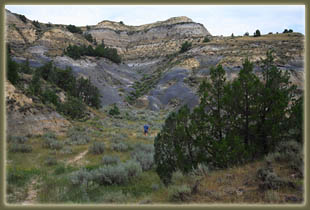
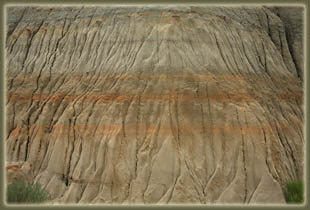
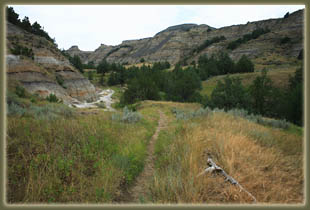
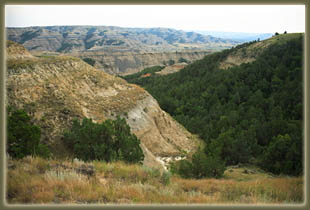
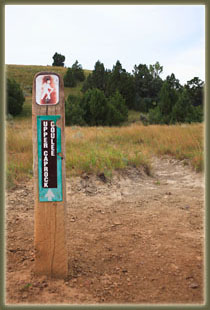
Caprock Coullee Trail. The beginning of the trail lead right into a gulch
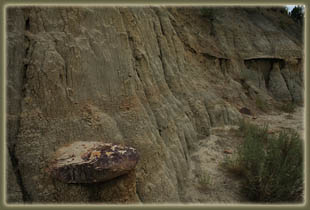
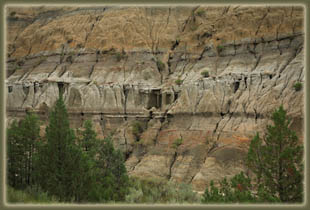
flanked by colorful clay dunes, each decorated with fluted rills and bulges.
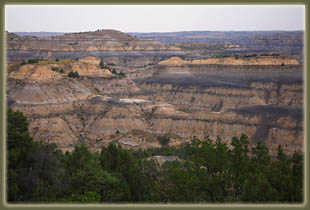
Layers of horizontal strata in varying shades of tan, red and purple contrasted
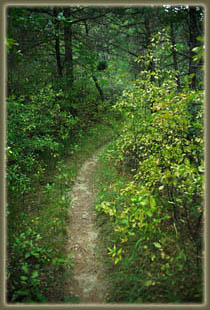
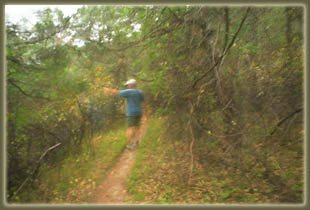
starkly with each other. The second part of the trail lead uphill through
a forest of small deciduous trees, many of them with brown, crispy leaves.
We saw a couple of owls just off the trail, and millions of devilish biting
black flies. I watched the trail closely to avoid walking through or near
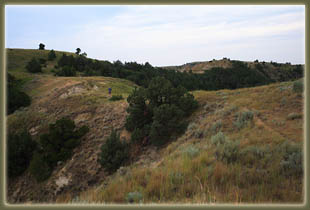
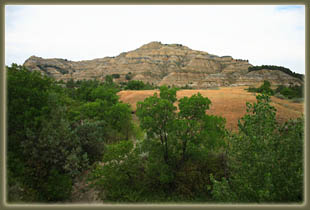
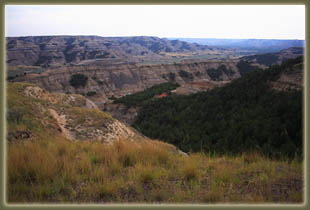
the abundant poison ivy. The trail left the forest and lead out onto a
grassy mesa with a nice view of the surrounding gulches and draws, all
with their own colorful strata. We got sprinkled on a little, but nothing
heavy. At this point, we simply turned around and headed back to the trailhead.
We had not picked up a trail map, so we had no idea that it probably would
have been quicker to continue on with the trail around the loop. That’s
what you get for being unprepared.
Back at the truck, we drove on to the end
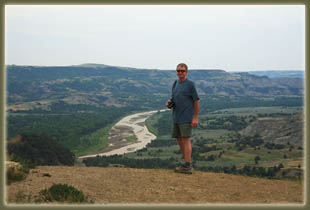
of the road to the Oxbow Overlook where we enjoyed the scenery and talked
at length with a group of 4 cyclists from Alabama who were noting the ferocious
black flies. They said even riding wouldn’t get rid of them because they
just
stuck to the back of legs and arms, out of the wind, happily draining blood
from their victims. In fact, all of us continuously slapped our legs and
arms as we stood there talking.
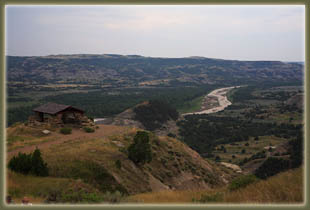
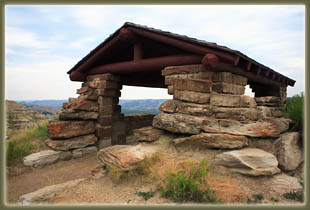
We made a final stop at an overlook of the
Little Missouri River where the park had constructed a nice stone and wood
structure. The wide, slow current of the Little Missouri moved slowly along
down below.
|

 |
;)
;)
;)
;)
;)
;)
;)
;)
;)
;)
;)
;)
;)
;)
;)
;)
;)